We sleep in stages with 90-minute cycles. REM sleep - when we dream - is a light sleep stage. Deep sleep is physically restorative; REM sleep is mentally restorative.
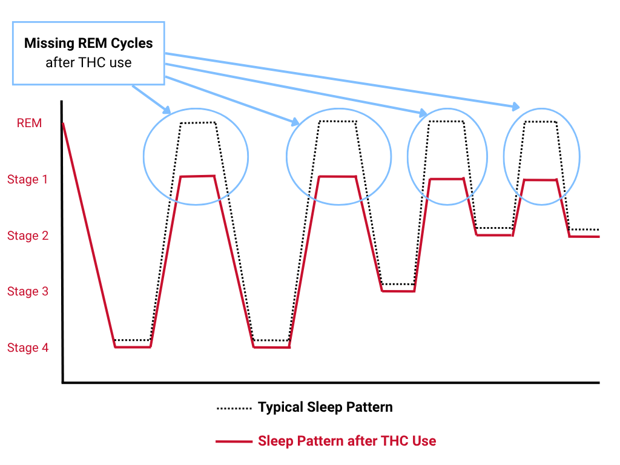
THC, like alcohol, brings people to deep stage sleep quicker. That’s why people feel like cannabis helps them fall asleep. But THC holds people in deep sleep all night. Physically, this is fairly restorative. The problem is that THC disrupts REM sleep. Since THC holds people in a deep stage- and REM happens in light stage- REM cycles get skipped.
If you smoke nightly, you go into REM rebound: you dream early and inefficiently. Many people who get high before bed think that they do not dream. When starting a t-break, you may experience vivid dreams: that’s you coming out of REM disruption.
Many people enjoy these vivid dreams. But for people who are experiencing nightmares, these vivid images are challenging. Hang on. It will settle soon.
REM disruption caused by cannabis likely impacts your daytime as well. The top 3 effects of REM deprivation are 1) irritability, 2) anxiety, and 3) feeling tired. These are the same things that many people report getting in the way of success.
People often describe feeling less “cloudy” when they take a break. They can thank better sleep and hitting their REM stages for this. Maybe you’re starting to feel these positive effects too.
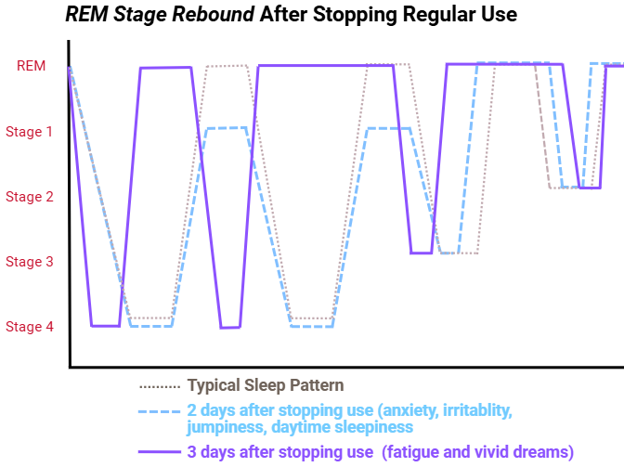
Notice how the REM segments are much wider on day 3; this is what’s responsible for those vivid dreams and fatigue.